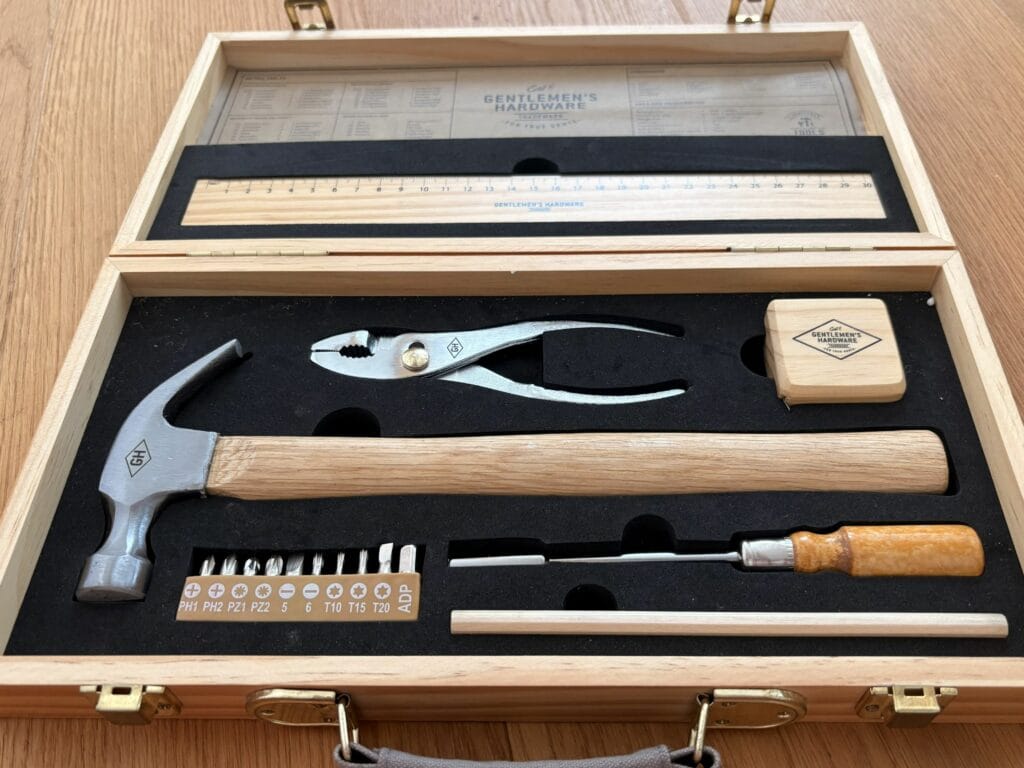
When something doesn’t work, we reach for a tool. We analyse, break things down, plan, steer and measure – and most of the time it helps. Over decades, organisations have built up an impressive toolbox tailored precisely to one kind of problem: the kind that can be clearly named, broken down into cause and effect, and solved with the right method. A machine stands still, you find the faulty part, you replace it. A process stalls, you optimise the bottleneck. This is the world most of our instruments were made for – and in that world they remain indispensable.
Increasingly, however, our organisations are wrestling with a different kind of challenge – the kind that eludes this “tool grip”. More than fifty years ago, the urban planner Horst Rittel called them “wicked problems”. Not because they are evil, but because they don’t behave the way our tools expect. They have no clear definition; how you describe the problem already depends on where you stand. They have no stop signal to indicate when they are solved. And every attempt to intervene at one point changes the whole and creates new challenges elsewhere.
Anyone who has ever tried to “solve” the shortage of skilled workers, the sluggish cooperation between departments, or the shift towards a regenerative economy with a single measure knows the feeling. You fix something – and somewhere else a new warning light comes on. This isn’t down to a lack of diligence. It is because we are treating a living, interconnected system with tools designed for simple “cause-and-effect” situations.
When the solution makes the problem worse
The most common reflex in confusing situations is to do more of what has provided security so far: plan more precisely, steer more tightly, take decisions into our own hands and pull them up the hierarchy. It feels responsible. Yet often it is precisely this reflex that aggravates the very problem it is meant to solve. More control draws decisions away from where things are actually happening, and thus away from the eyes and ears that are closest to them. The apparatus responds more slowly, perception narrows, and the complexity one wanted to tame keeps growing in the background, while the bureaucracy begins to swell on top of it.
Complexity is therefore not an argument for more centralisation, but one for distributed intelligence. The thicker the fog grows, the more we need the perception, experience and judgement of different people who hold the relevant competence. Whoever tries to concentrate that at the top gains the appearance of control and loses precisely what they need most urgently: the capacity to form a holistic, qualified judgement – one that must not only be calculated, but often also sensed.
What takes the place of the tool
When a problem cannot be solved but only worked on, the question changes. It is no longer “Which tool can manage this?” but “Who needs to come together so that we can do justice to the matter?”. In place of the one right method comes the interplay of different perspectives. In place of the quick answer comes the ability to bear not-knowing for a while, without prematurely stilling it with a pseudo-solution.
We are not talking about a soft ingredient or a nice accessory for innovation workshops. We are talking about a mature way of dealing with complexity. Wicked problems are, by their very nature, shared: no one sees them whole, no one solves them alone. What they demand is neither the lone expert with the right instrument nor the powerful leader, but an organisation that integrates diversity, enables learning loops, and distributes responsibility to where perception is densest. This is exactly what we mean by collective capability: the ability to see, interpret and act together – and that is more than the sum of individual contributions.
Don’t throw the tools away – put them in their place
As mentioned: analysis, planning and steering have not had their day. There are still clearly defined problems, and for these the tried-and-tested toolbox remains the best answer. The mistake lies not in the tool, but in the confusion over how it is applied: we shouldn’t be surprised that the “repairs” don’t hold when we treat a wicked problem with a simple cause-and-effect approach.
Perhaps real maturity begins where we learn to tell the two kinds of problem apart. Where we pause, before reflexively reaching for the familiar instrument, and ask ourselves: is this something I can repair – or is it something we can only do justice to together, feeling our way and learning as we go? Let us put our heads together, dare to enter into dialogue, and practise together how to bear the uncertainties and to meet the tasks of our time with shared intelligence.
Stay curious. Discover the new We.