If you want to go fast, go alone. If you want to go far, go together. This African proverb captures a truth that everyday working life tends to obscure. We are trained to clarify responsibilities, delineate tasks and deliver within our own remit. And that is precisely why the most important connections often lie where our responsibility ends.
Some time ago I was leading a course and chose a joiner in the Bregenzerwald whom we visited on site. I wanted the participants to hear from him directly what connectedness means. What happened next taught me more about cooperation than any specialist debate could.
The right moment, not the next available one
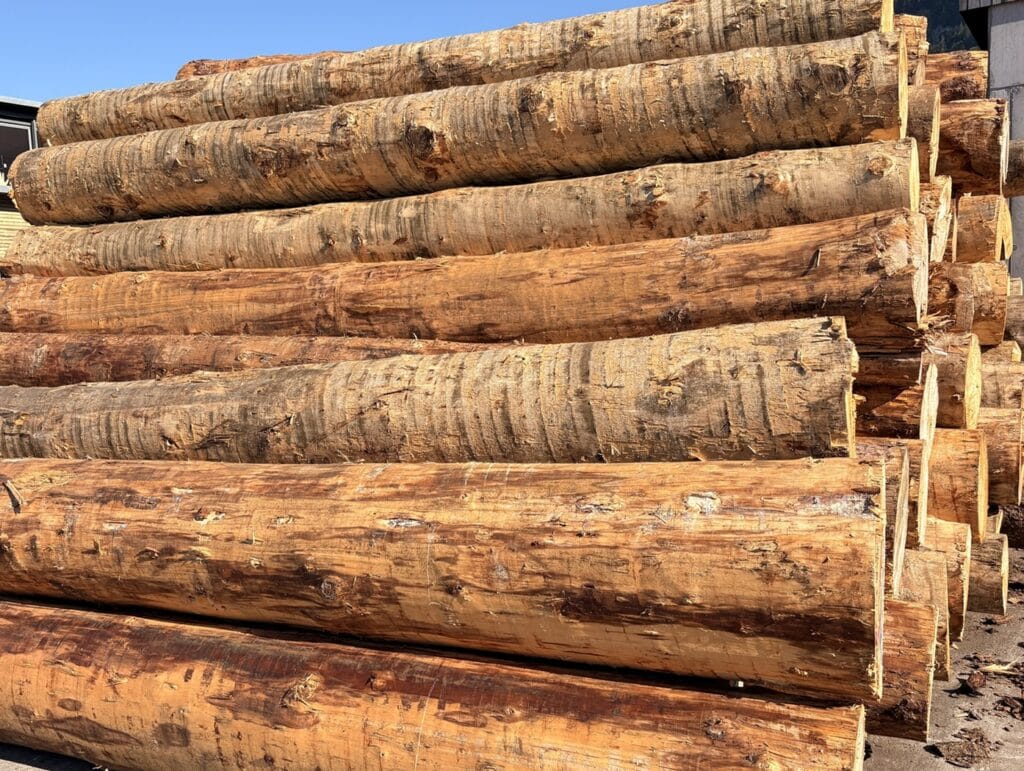
His work bears the signature of the Bregenzerwald tradition. But it does not stop there. He pays attention to which trees are felled and where they come from. He looks at proximity and at quality, but above all at timing. Felling happens during the dormant season, when the tree has drawn back its sap. Not when the order book demands it.
You have to pause for a moment to see what is happening here. A craftsman sets his rhythm not by his own workload but by the rhythm of the tree. He cooperates with something that writes no invoice and signs no contract. It is a cooperation with the material and its origin, and it begins long before the first cut is made.
Connections that appear in no order book
Then he spoke about his financing. He checks where his money comes from and on what terms his bank operates, what it promotes and what it accepts. I had not expected this from a business of that size, and it was the moment when the participants fell silent. And because the place matters to him, he opens his premises to artists from the region and gives them a stage.
Four connections that elsewhere have long been severed: to the material and its origin, to the rhythm of growth, to capital and its conditions, to the place and its culture. None of them appears in his order book. None is remunerated. And yet they carry his work in a way no price can capture. Cooperation across boundaries means exactly this: bringing back together the strands that a purely transactional logic has cut.
That takes perseverance, because the results are rarely visible at once. And it takes curiosity, because the solutions often lie beyond one’s own field. The joiner could have made things easier for himself. Buy timber when it is needed. Choose the bank with the best rate. Leave art aside. None of that would have broken a rule. And yet something would have been lost.
Why we find this difficult
In many organisations we encounter the same dynamic, only often harder to discern. Boundaries are unavoidable and often useful. Teams need cohesion, departments need focus, organisations need identity. Yet the very boundaries that create belonging also create separation. Silos form between departments, purely transactional logics between a company and its partners, and a distance between organisations and their surroundings that tempts us to ignore our own impact.
The Jester:
Lovely story. Just one question: whose number ends up in which row at the year’s end?
„The very boundaries that create belonging also create separation.“ Charming. As if the separation were a regrettable side effect. It is not. It is rewarded. Sales is measured on deals, production on capacity. Everyone dutifully delivers in their own row. And the joiner? He can put the rhythm of the tree above the order book because no one holds his capacity against him as a quarterly figure. Imagine if it were otherwise.
The objection lands. It shows that cooperation across boundaries is not a question of good will but of what we measure and reward. The joiner can work this way because he himself decides what success means for him. In larger organisations a metric often decides that. And as long as this metric knows only the quarterly slice, every connection beyond one’s own row remains a cost.
What cooperation brings
Yet this is exactly where the blind spot lies. What organisations carry in hidden costs when cooperation is missing appears in no balance sheet, until it strikes with force. The supplier who leaves at the first opportunity because the relationship was purely transactional. The customer who switches to a competitor because she felt treated as a buyer and not as a partner. Cooperation does pay off, only in a broader currency than quarterly profit: in resilience, because robust relationships weather crises better than optimised supply chains, and in trust, which cannot be bought.
Perhaps the more honest question is not whether cooperation pays, but whether we can afford its absence in the long run. The joiner in the Bregenzerwald has answered that for himself. He reconnected the severed strands without anyone asking him to. And the participants who fell silent understood something in that moment that is hard to fit onto a slide: that the most load-bearing connections are often the ones recorded nowhere.
Stay curious.