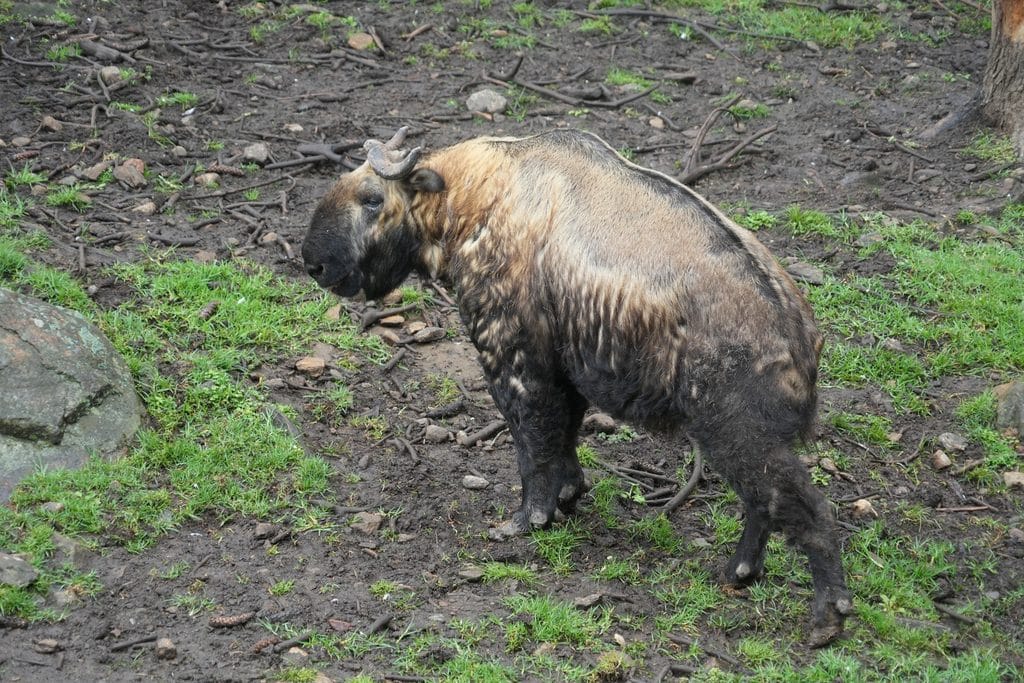
The people wanted to see a miracle, but Drukpa Kunley wanted to eat first. So the story goes in Bhutan: as the wandering lama travelled through the country a good 500 years ago, people pressed him to show his powers. First, he asked for lunch: a whole cow and a whole goat. He ate both until nothing was left but bones. Then he placed the goat’s head on the cow’s skeleton, snapped his fingers, and the strange creature got up and trotted off into the mountains.
Ever since, the takin has grazed on Bhutan’s slopes; today it is the national animal. It looks as though someone put it together. Which, if you believe the legend, is exactly what happened.
It is hard to fit more of a lesson into a single story: Drukpa Kunley does not deliver what you order – or does he? Certainly not as you expect, though. In his own way.
The ‘Divine Madman’
Drukpa Kunley (c. 1455–1529) was an ordained lama who turned his back on the monastery without ever turning his back on his tradition. He taught through songs, bawdiness and provocation. He mocked sanctimony, posturing and empty ritual. He woke people up by unsettling them.
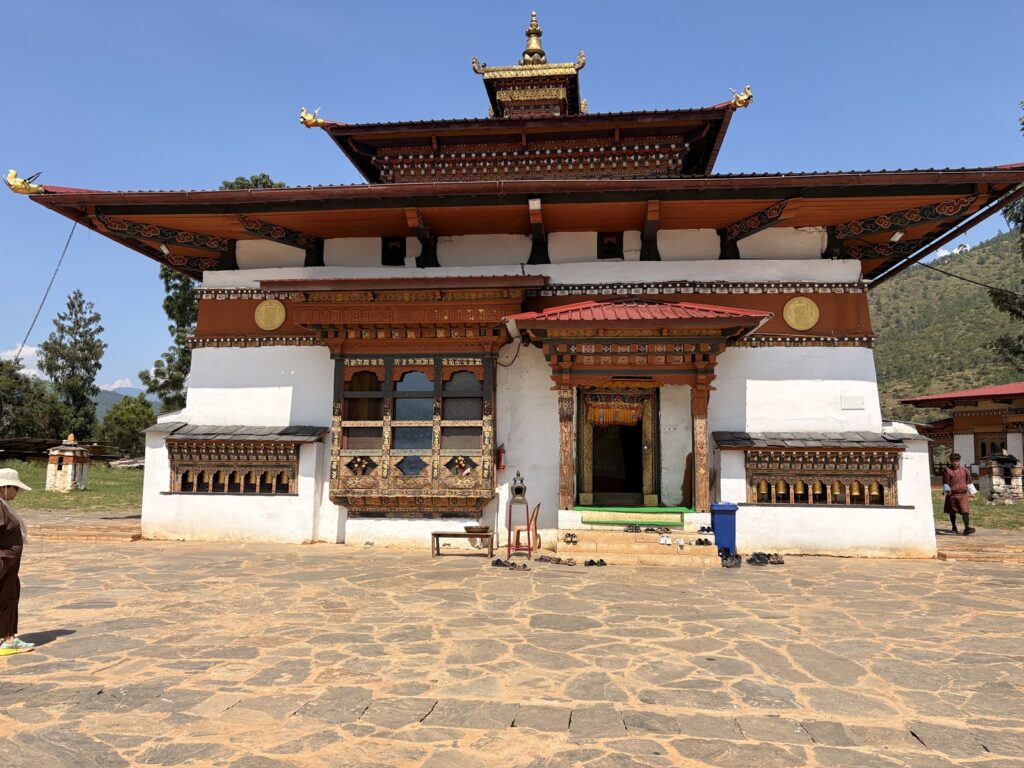
A few days ago we stood in Chimi Lhakhang, the fertility temple on ‘his’ hill. Couples travel from far and wide to receive its blessing. To this day, many houses across the country bear the unmistakable symbols of his teaching. Anyone who suppresses a smile at the sight has missed the lesson.
The clowns who are not clowns
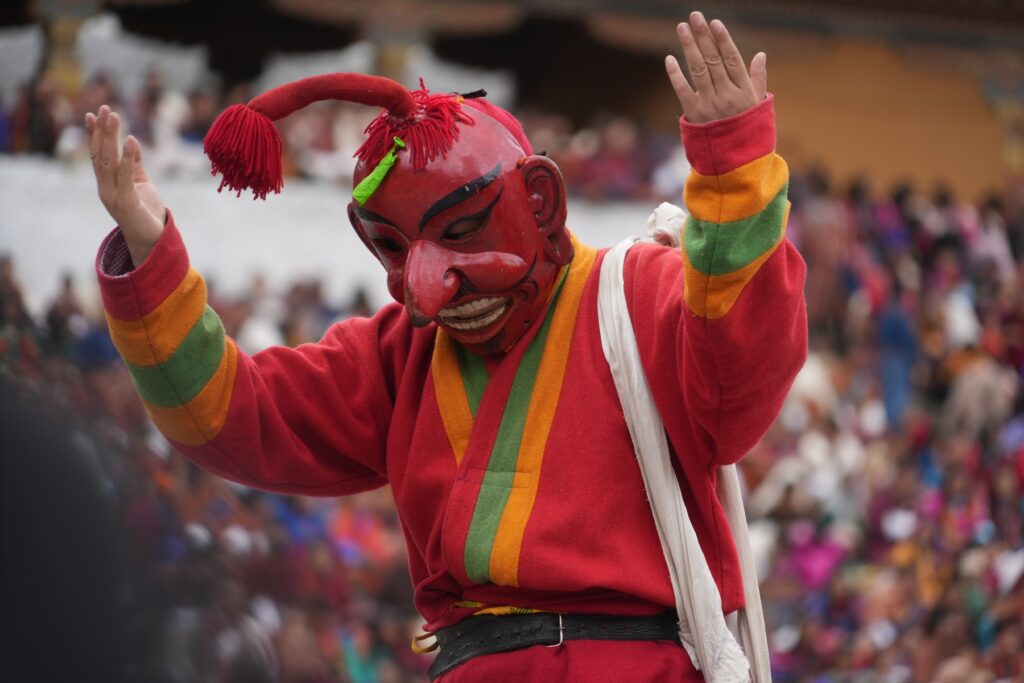
Shortly before, we had sat on the ground at the Tshechus in Thimphu and Gangtey, right among the people, watching the masked dances. That is where we met them, without knowing it: the Atsaras.
In their red masks, they tease the spectators, interrupt the solemnity and cross boundaries – in the very middle of the ritual, not off to one side. At the same time, they keep order with a great deal of humour. They keep the dance ground clear, straighten slipping masks and know the steps of the dances. The highest-ranking among them moves through the crowd, blessing the people.
Even their name speaks volumes. ‘Atsara’ goes back to the Sanskrit word Acharya: teacher, master. Anyone who wants to dance on a knife-edge needs both: knowledge and a mindful light-heartedness.
What struck us
Bhutan did not banish its greatest troublemaker. It built him a temple and gave his role a permanent place at every festival. A country that has made happiness a national goal honours, of all people, its mockers. Here, happiness clearly does not mean harmony at any price.
And one more thing: the Divine Madman, like the Atsaras, never stands entirely outside, for criticism from the outside is cheap. Yet they never let themselves be co-opted either. They are boundary walkers between monastery and tavern, between ritual and laughter. And they show something that is easily overlooked: those who are allowed to cross boundaries know the rules best. The fool does not disrupt the whole; he serves it.
We had not expected this: here in Bhutan we meet our own co-author in different garb – the Jester, the court fool. We feel affirmed and encouraged. He has always played an important role, and it is high time to give him a place in today’s organisations once again.
A few questions for your organisation
- Who in your organisation may say what everyone is thinking and no one says out loud – without it costing them their career?
- Where does dissent have a firm place, and where is it no more than lip service?
- How much room does the unexpected get in your organisation – and when is it cut down to size?
In our book, the Jester accompanies us as a critical counter-voice from the very first page. And at the end, he is given a place in the organisation. What we can already say for certain:
‘It needn’t be a temple. A seat at the table would do.’