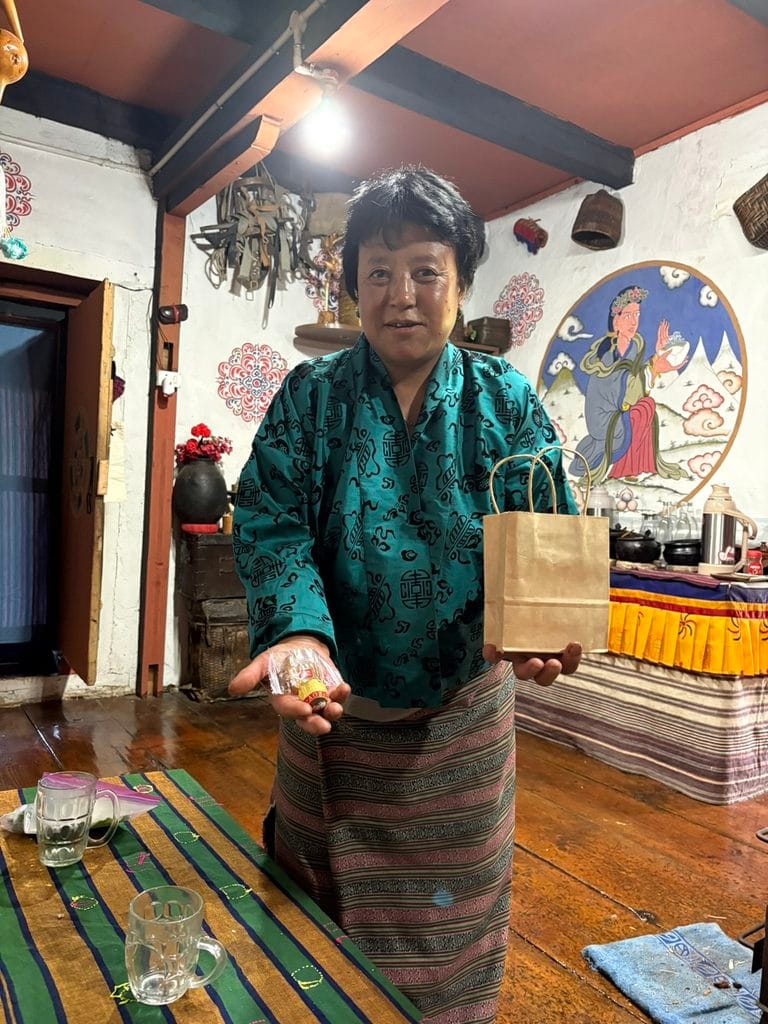
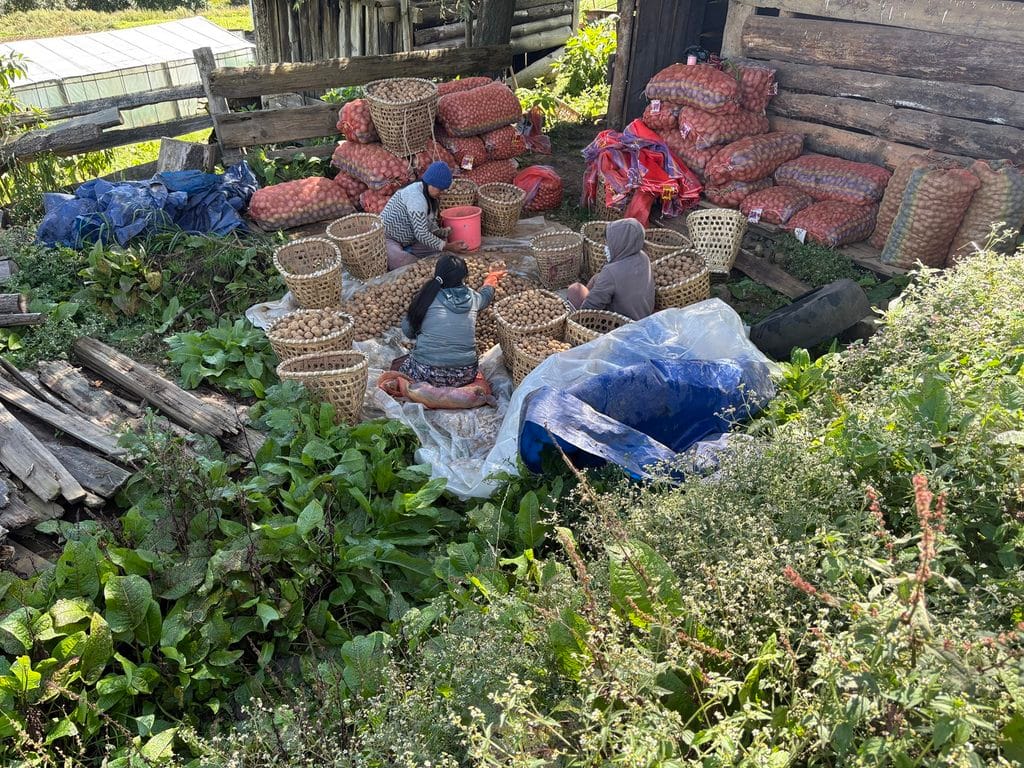
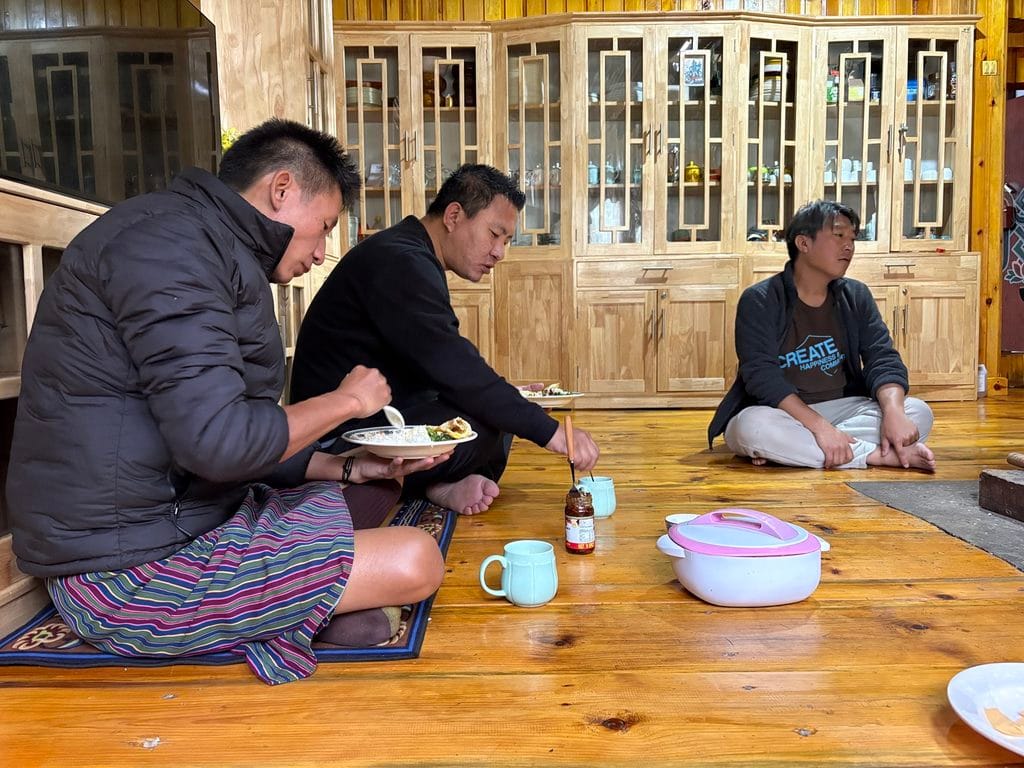
At breakfast in the Deki Farmhouse in Gangtey we sit on mats on the floor, the dishes set before us in clay pots on woven rings, when our host, almost hesitantly, puts down a small jar and asks cautiously whether we might like to try it: a crunchy spice mix of garlic, onions and tomatoes that the family makes themselves. Later, in the same way, he brings a black paste made from beans from their own garden and explains each ingredient with a care that reveals more than any recipe. The evening before, we had sat with the extended family around the wood stove, eating rice, freshly harvested broccoli and the potatoes you see everywhere in the valley these days, as the harvest is being brought in.
Almost everything here is home-grown, and yet this farm is no place where time has stood still. A few steps from the house, chillies grow in a greenhouse whose temperature and irrigation are digitally controlled, and our host follows the data on his smartphone. The clay pot on the wooden floor and the screen in his hand are no contradiction for him, any more than the fact that he works the farm while his wife and sister-in-law work at a luxury hotel in the valley. Technology does not replace what is their own here; it serves it.
Like Sky and Earth
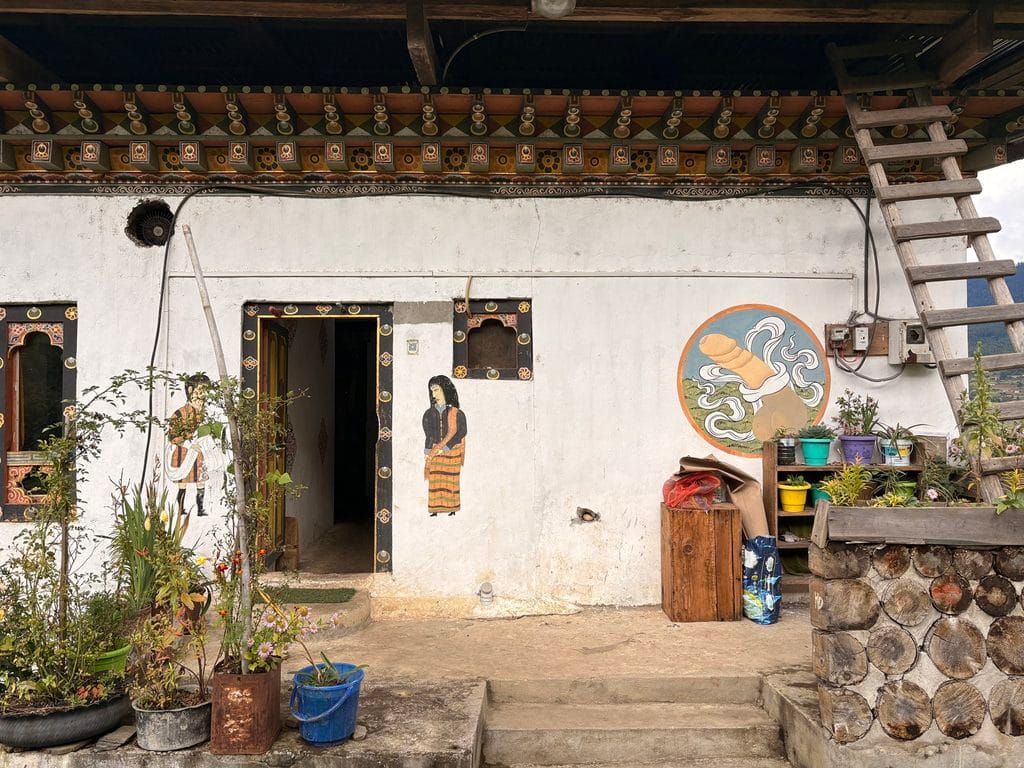
We understand what this means better after our conversation with Passang Zam, a farmer who has run a homestay for twelve years and who, with Karma helping to translate, tells us how her life has changed over twenty years. The difference, she says, is like sky and earth. Back then there was no electricity, no road and no metal roof; firewood was carried on your back from the forest, and anyone wanting to reach the next valley crossed the mountains on foot. Today the wood comes by lorry, and there is a power tiller for the potatoes.
In our conversations about Gross National Happiness, growth is often approached with caution. From Passang Zam, progress sounds different: tangible, welcome, a relief you can feel in your shoulders. She measures it not in numbers but by whether everyday life has become easier. This holds an uncomfortable question for organisations that introduce new systems and tools and read their success from key figures: do people feel that their everyday work is becoming easier? Change is embraced when it brings relief and strengthens what makes an organisation what it is; it is merely endured when it only convinces on paper.
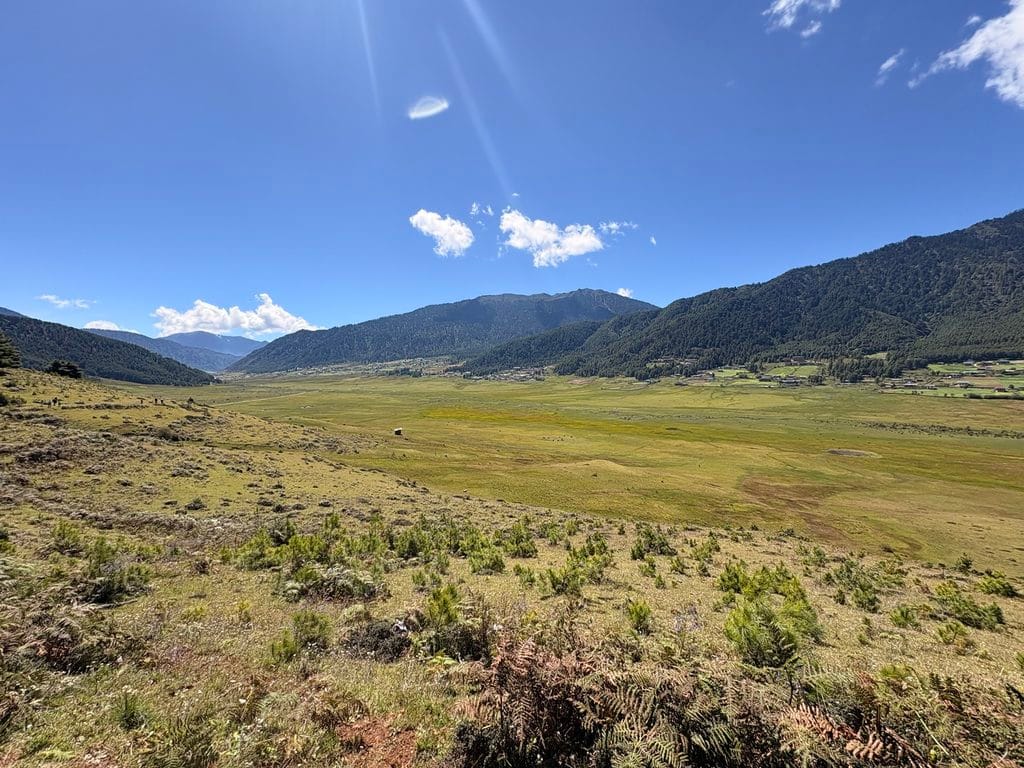
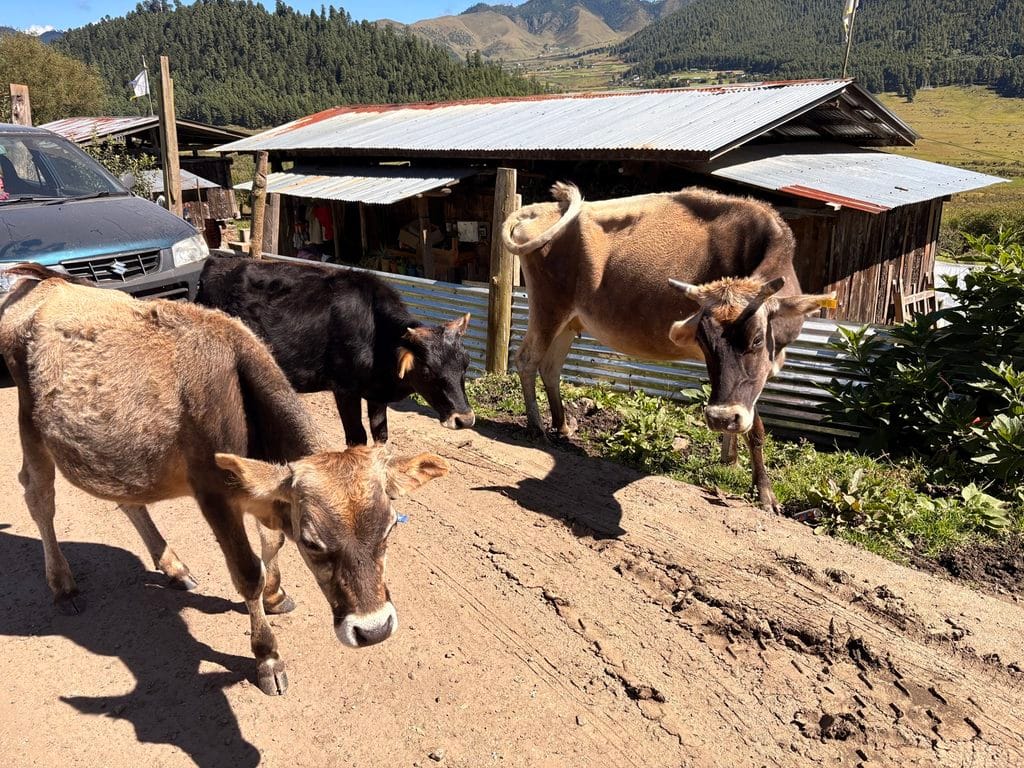

Happiness Is Close at Hand
Towards the end we ask Passang Zam a question that is almost taken for granted in Bhutan: what is happiness for you? Her answer needs no theory: living in your own house, being in your own village, seeing that your children are well, and having a community in which people are connected – with the monastery, the offerings and the festivals.
Yet her children no longer live in the village. Her two sons are in Australia, and her daughter is building her own business in Thimphu. They ask their mother to stop and come to live with them, but Passang Zam wants to keep running the homestay for as long as she can, perhaps until 65, and wonders how far she should depend on others while she can still contribute herself. For her, work is not a burden but an expression of dignity and self-determination.
Anyone who pictures breakfast at the Deki Farmhouse will recognise the same pattern: in the quiet joy with which our host offers his jars lies the pride of someone who has created something of his own and can share it. Belonging, rootedness and the sense of contributing shape satisfaction in organisations just as much as in a village in the Phobjikha Valley. How much community do we make possible? And do we find suitable forms for people who want to contribute for as long as they can, instead of an abrupt end?
Perhaps this is the quiet lesson from Gangtey: progress and happiness need not be opposites, as long as progress makes life easier and strengthens what is one’s own rather than replacing it. How do the people in your organisation notice that their everyday work is becoming easier – and how much of it is truly their own?