
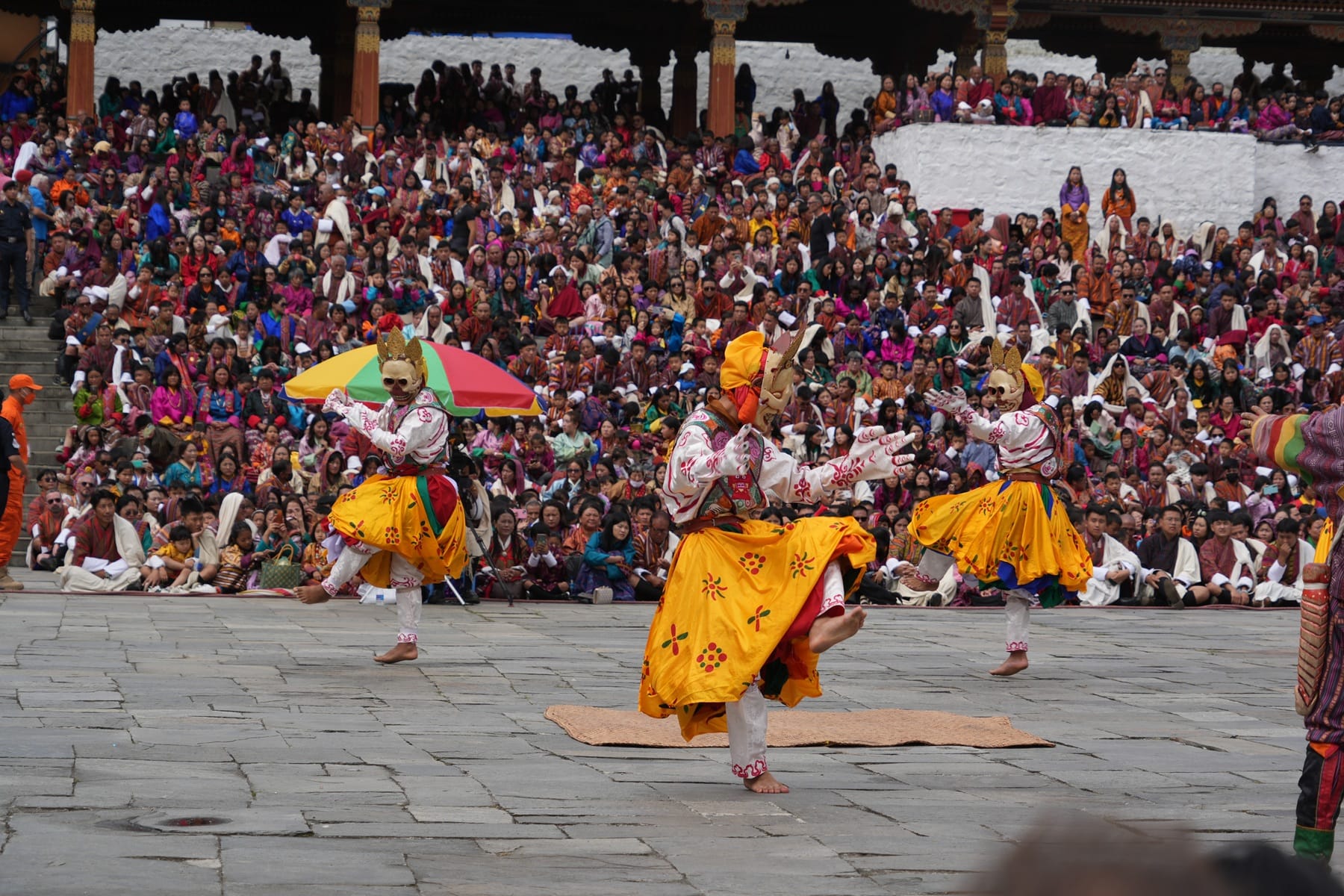
Exploring happiness, responsibility and sustainable development
A journey to listen, learn and question our own thinking
Thank you for joining our journey.
We are travelling to Bhutan to listen, learn and explore how the idea of Gross National Happiness can broaden our understanding of sustainable development – and what it might teach us about the way we organise, collaborate and take responsibility.
We are not coming with answers. We are coming with questions – and with a genuine curiosity about what we might discover when we look at some of our own assumptions from a different perspective.
If we met you along the way: thank you for sharing your time, thoughts and perspective with us.
Why Bhutan
Bhutan has chosen a remarkable perspective on development. With Gross National Happiness, the country asks a question that reaches beyond economic growth: What enables people, communities and society to flourish – today and in the future?
This question resonates strongly with our own work. In organisations, too, we see the limits of approaches that focus primarily on growth, efficiency and measurable results. These things matter – but they do not tell the whole story.
With Collaboraising Organisations®, we explore how organisations can combine their economic purpose with meaningful contribution, shared responsibility, human development and sustainable impact. We are curious to discover where this thinking connects with the principles and lived reality of Gross National Happiness – and where it may challenge our assumptions.
That is why we are here: not to transfer a model from Bhutan to organisations, but to learn from a different way of looking at what development and progress can mean.
Our learning journey
Over three weeks, we are travelling through Bhutan and meeting people with very different perspectives on Gross National Happiness and the future of the country.
Our conversations will take us from research and education to entrepreneurship, agriculture and monastic life. We will speak with people who study and shape the concept of Gross National Happiness – and with people whose everyday lives offer a very different perspective on what happiness, responsibility and sustainable development might mean.
We are interested in the spaces between policy and everyday life, between aspiration and reality, and between Bhutanese perspectives and our own ways of thinking.
To welcome us, Karma introduces himself as our guide for these three weeks, together with Samten, our driver. Karma immediately begins talking about Buddhism and about how we as human beings are connected to one another across past and future lives. “So many guests arrive, and there are so many guides,” he says, “but somehow, it is the three of us who will be together for the next three weeks. We are family now.”
-
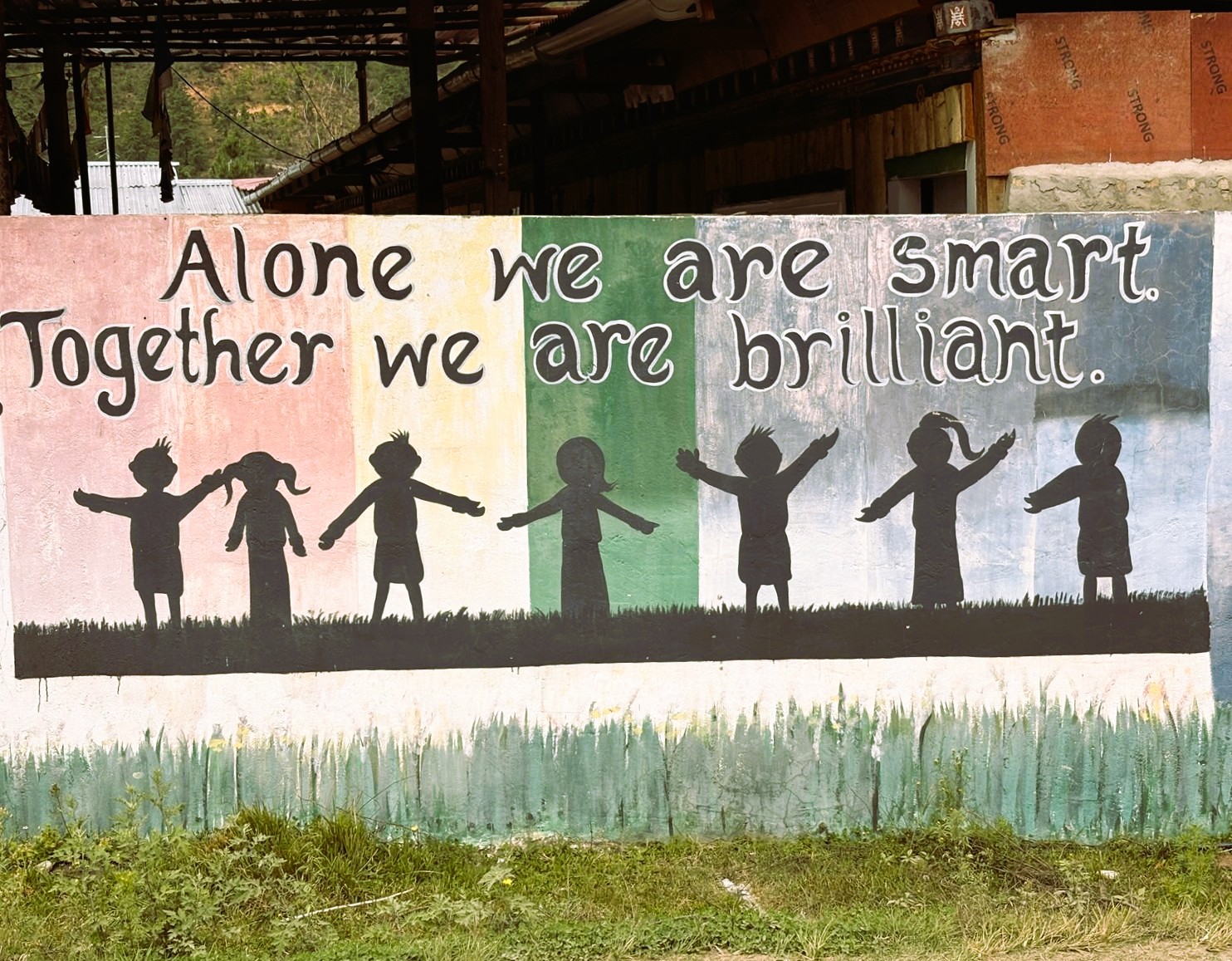
Final Glimpses of Bhutan
Brief encounters, a sign, a number: small glimpses of Bhutan – to make you smile, reflect and keep asking.
-
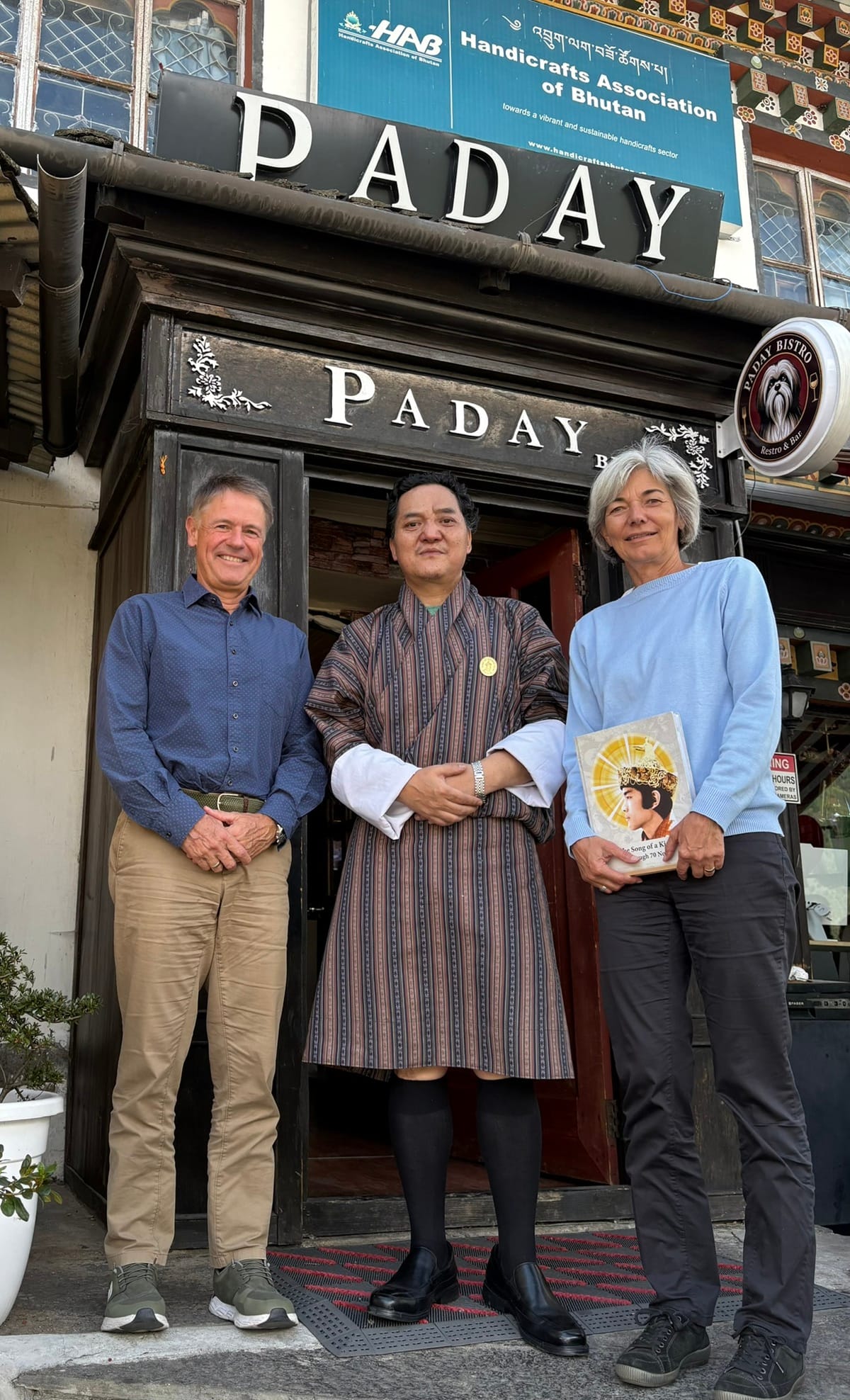
Becoming Bolder in Bhutan
Lunch in Thimphu with Ugyen Tenzin, CEO of Business Bhutan: on a high hurdle, a small population, the courage the…
-
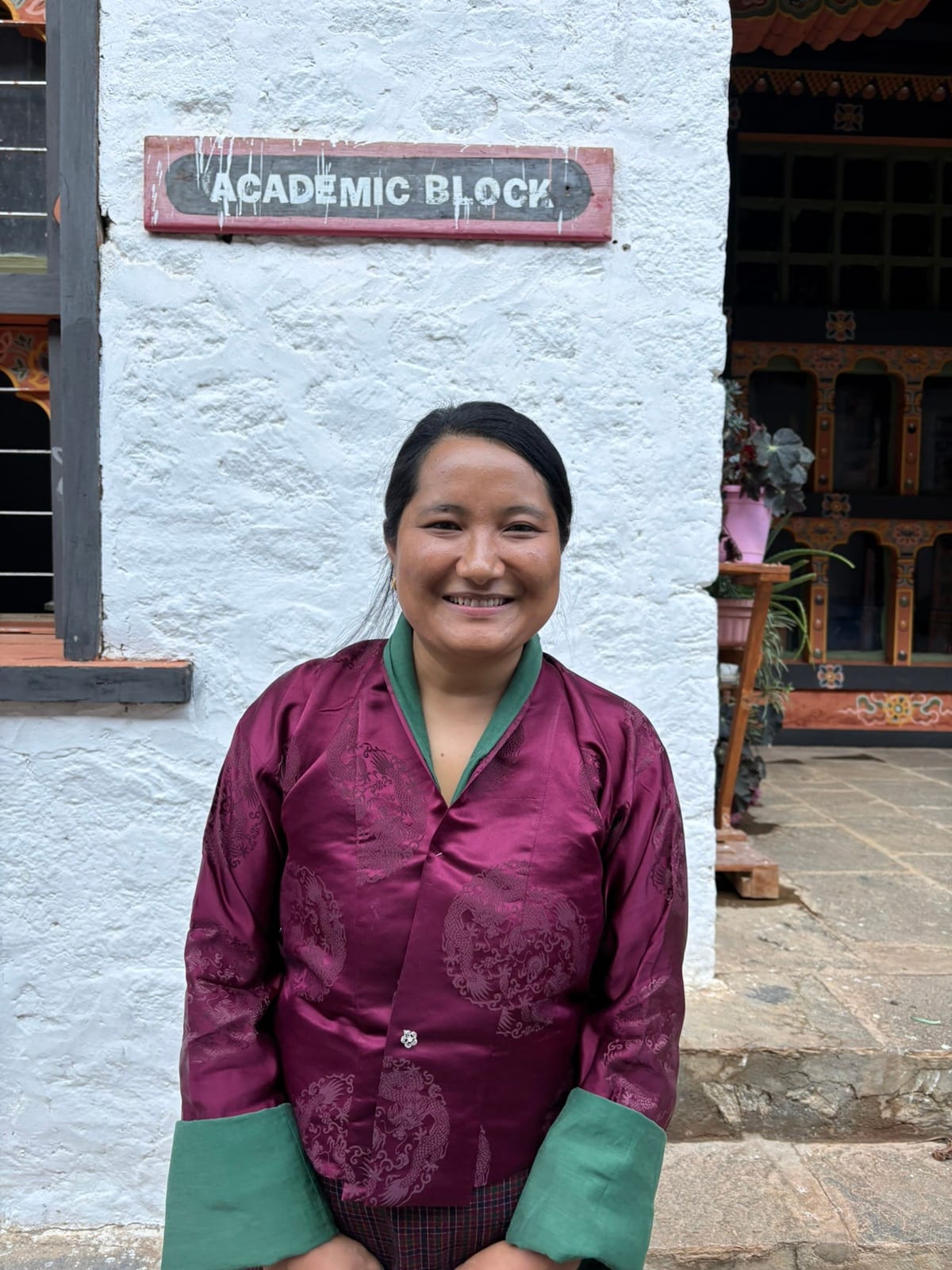
Bhutan: Honouring Limits, Embracing Change
Two encounters at two colleges: with a lecturer who takes carrying capacity seriously, another who speaks openly about how Bhutan…
-
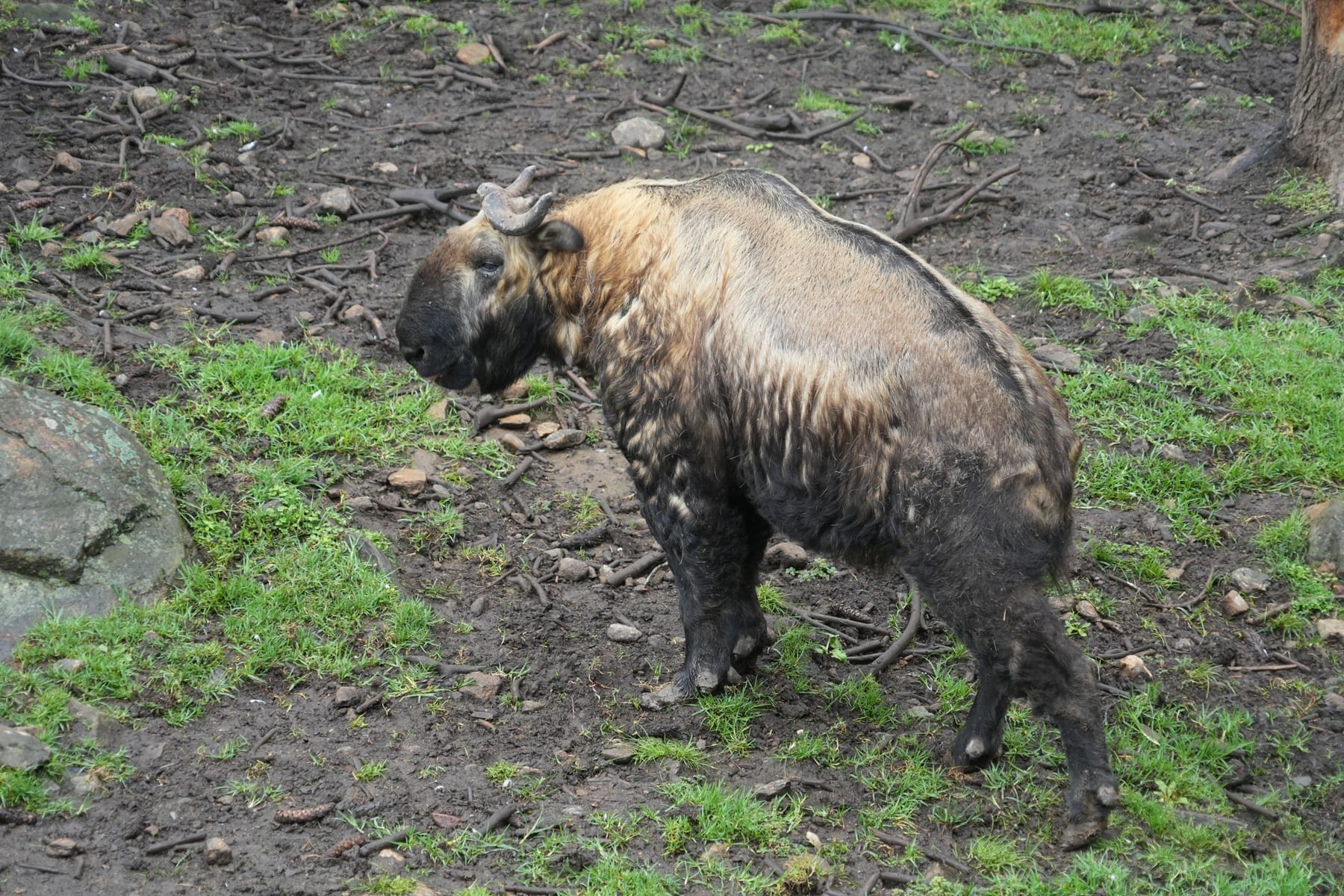
Divine Madman – or how a lunch became a takin
Before Drukpa Kunley performed his miracle, he asked for lunch – and from the leftovers the takin was born. On…
-
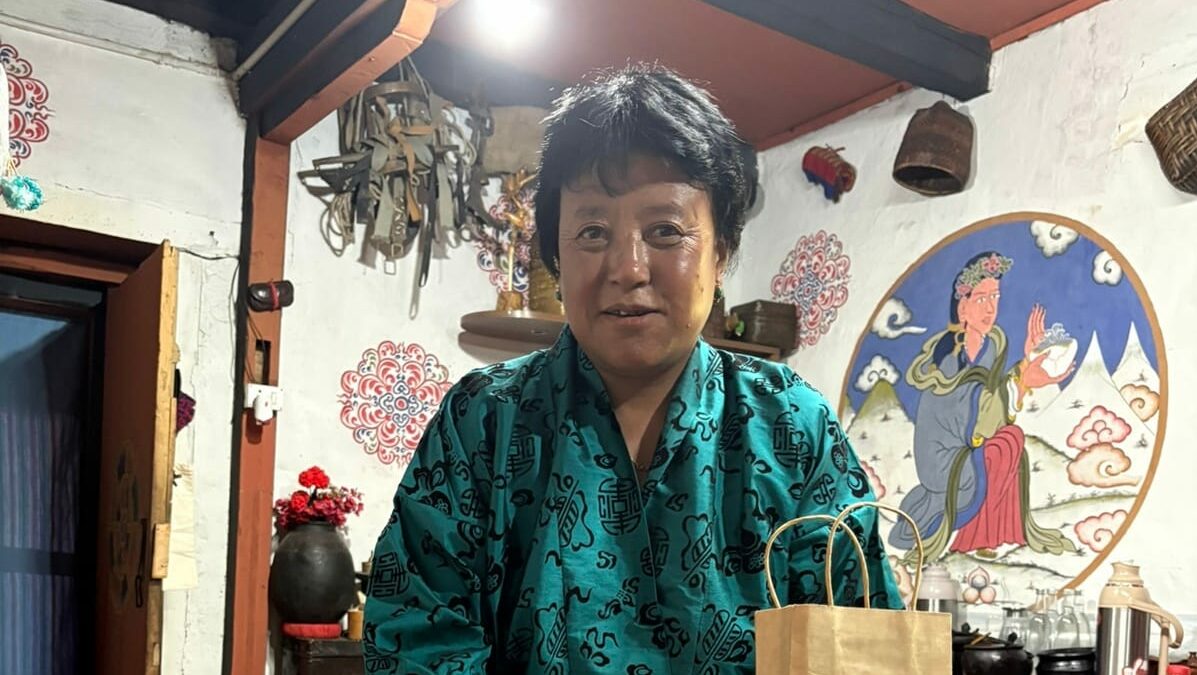
Progress and Happiness: What Bhutan’s Farmers Teach Us
Chillies controlled by smartphone, bean paste from the family garden and a farmer for whom progress means one thing above…
-
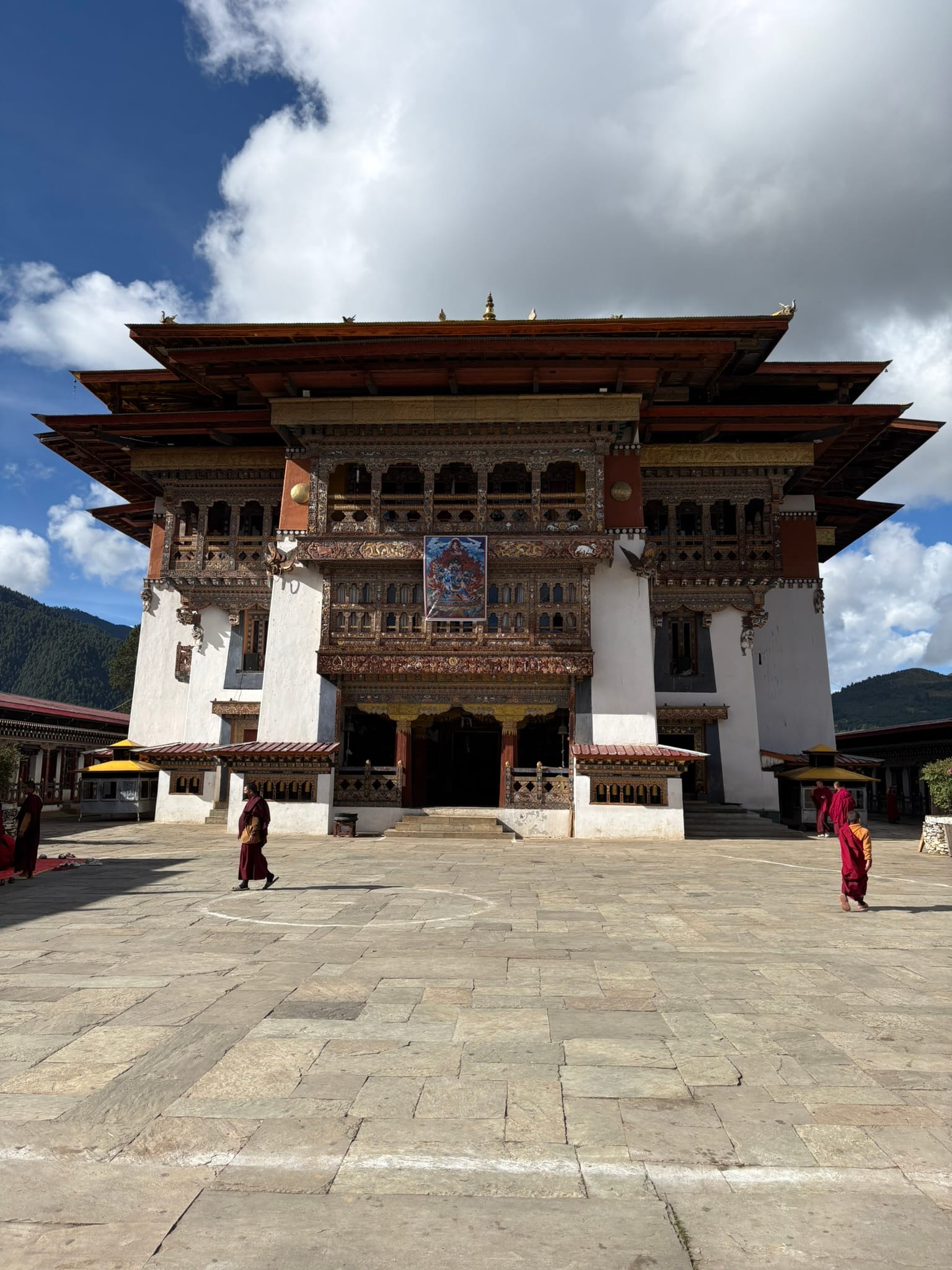
The Temple Conversation at Gangtey Monastery
In the middle of the temple at Gangtey Monastery, Dorji Lopen Ugyen Sonam talks to us about letting go, about…
-
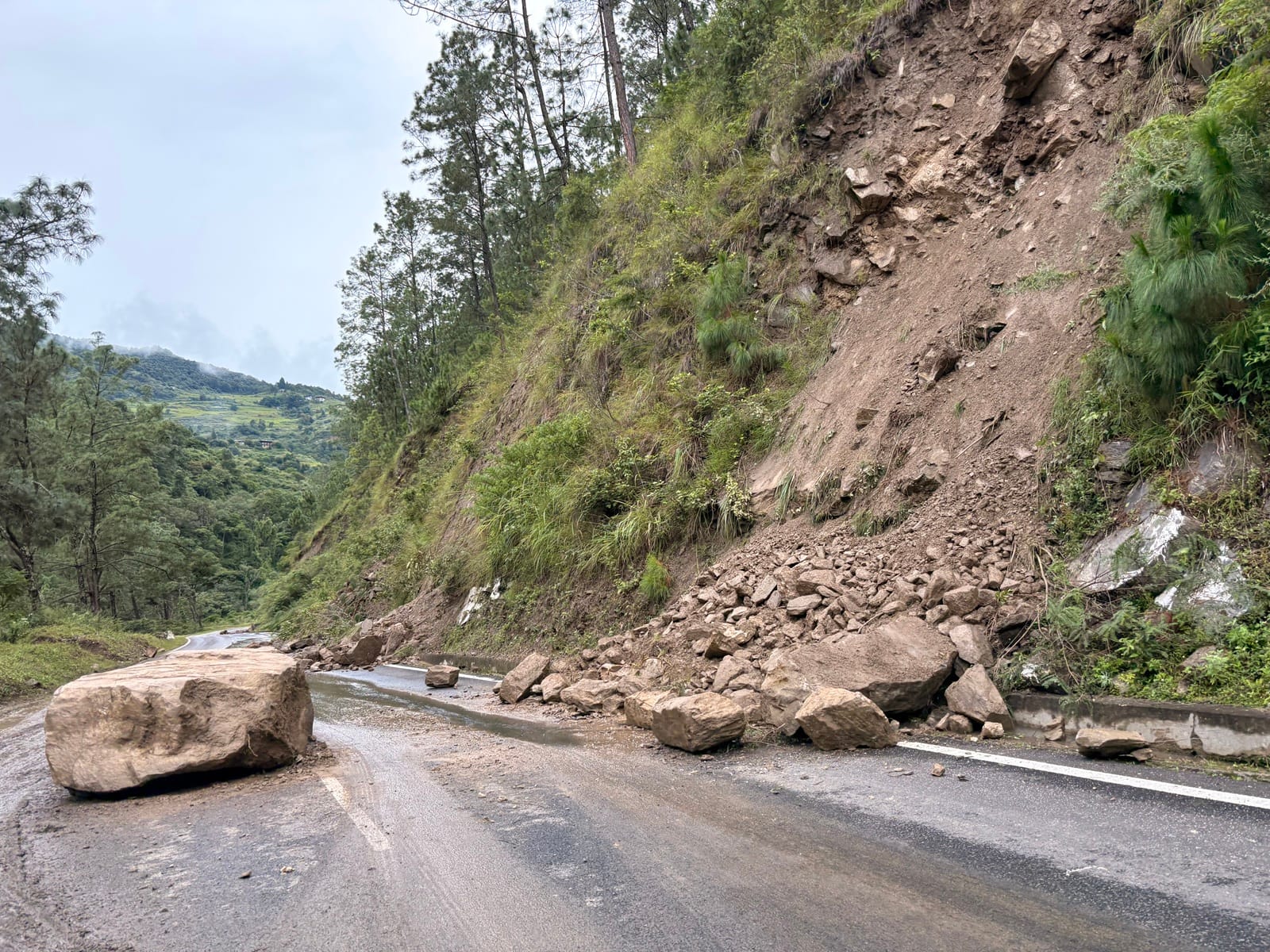
Down to Earth, Mindfully
Five hours of hairpin bends, a UN speech in our ears and, at the end, a cold farmhouse in the…
-
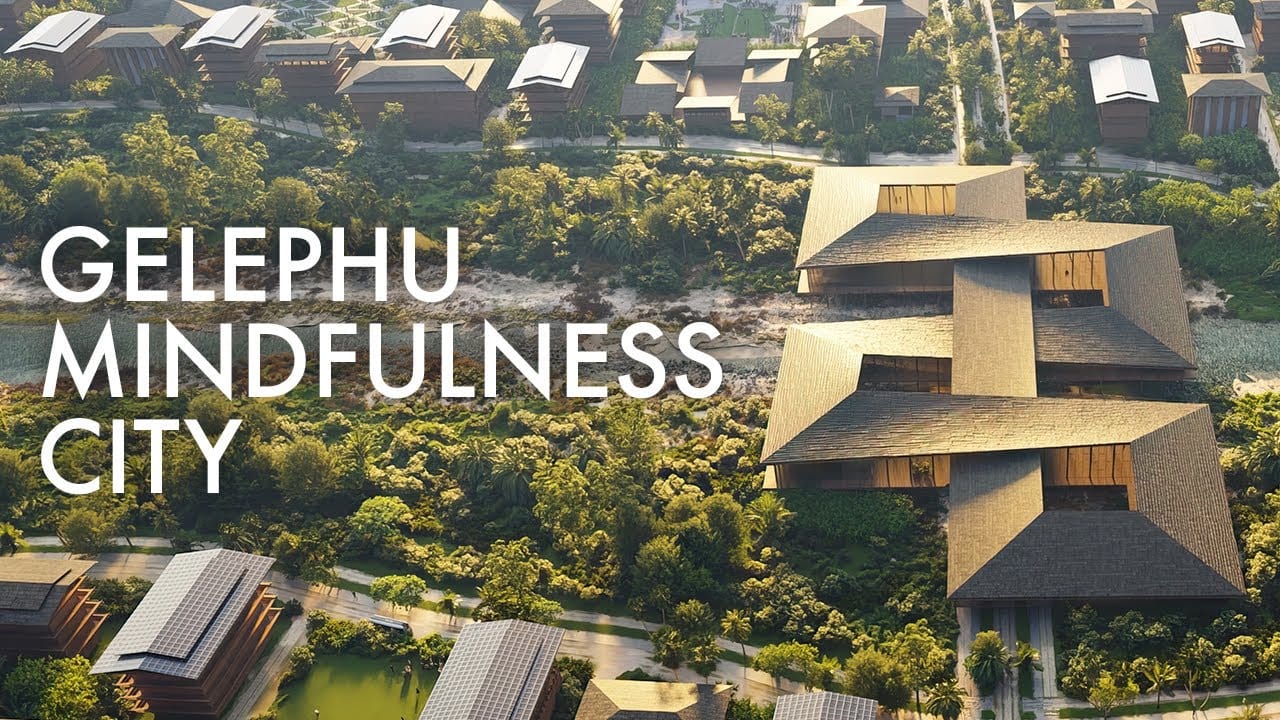
Factbox: Gelephu Mindfulness City (GMC)
With Gelephu Mindfulness City, Bhutan wants to chart its own path of development: a new city in the south that…
-
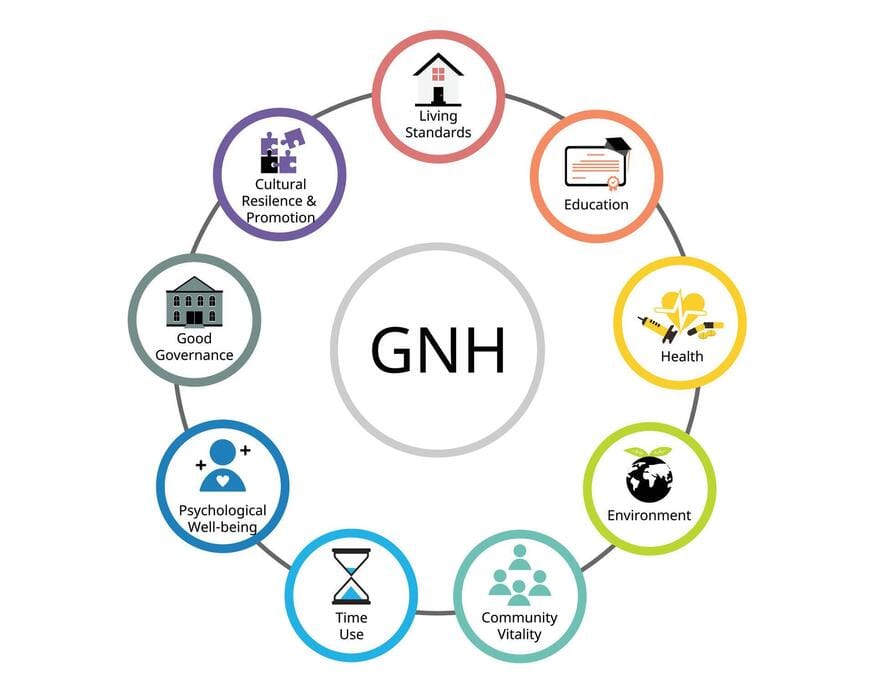
Happiness that includes peace – two conversations in Thimphu
In Dzongkha, Gross National Happiness means both happiness and peace. Two conversations in Thimphu – with Lhatu Lhatu of the…
-
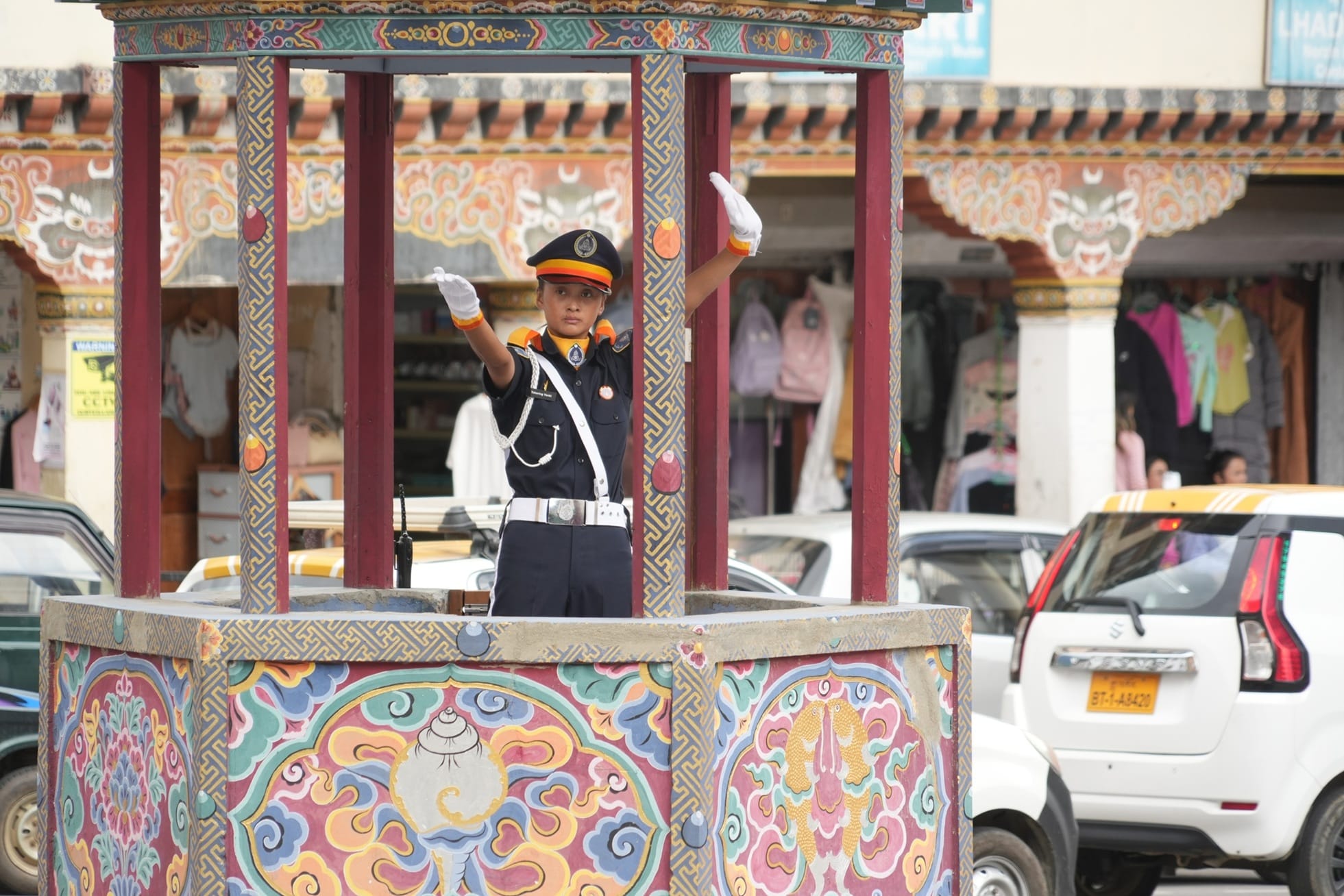
Driving in Circles – Thinking in Circles?
At Thimphu’s famous roundabout, in the only capital in the world without traffic lights, we watch a traffic officer at…
-
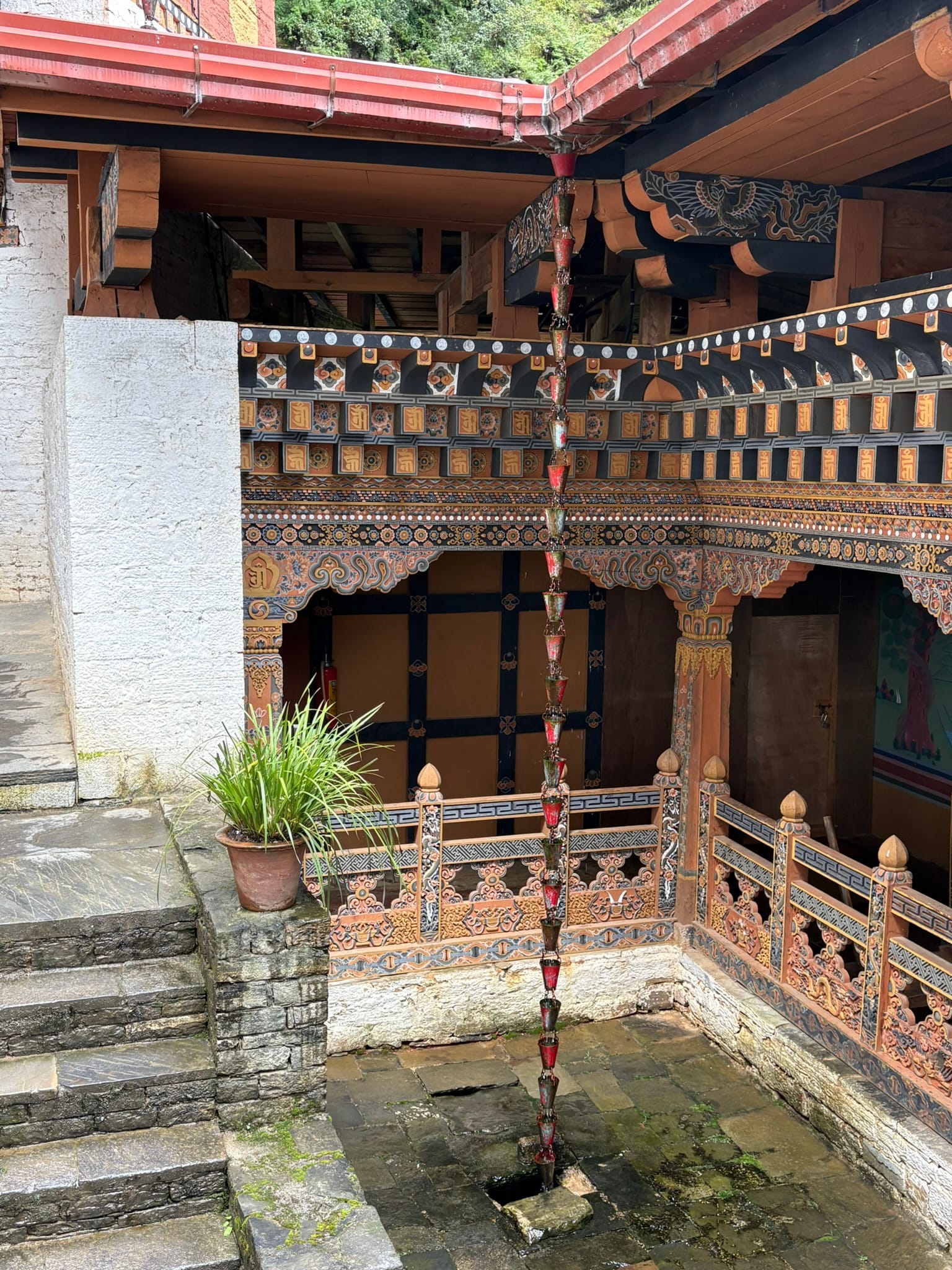
From Vessel to Vessel – Gentle and Simple
An aha moment at Cheri Monastery: rainwater trickling quietly from vessel to vessel.
-
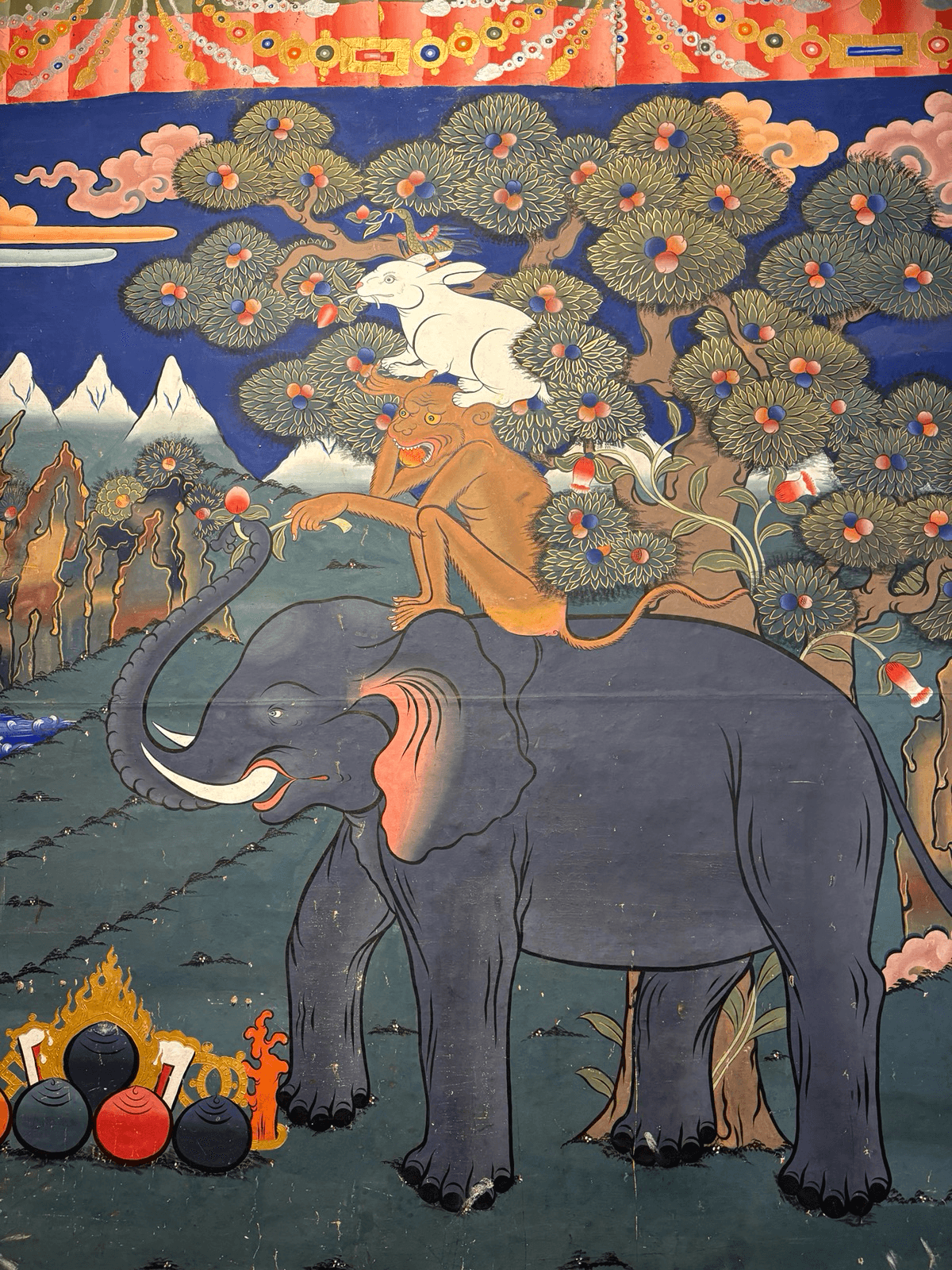
The four harmonious friends: teamwork in Bhutan
At Rinpung Dzong in Paro, Karma shows us an image you encounter everywhere in Bhutan: four animals at a fruit…